

some thoughts on Obsession
—Charlie Kirk, Deleuze, & spoilers inside— + day 2 of writing every day of June

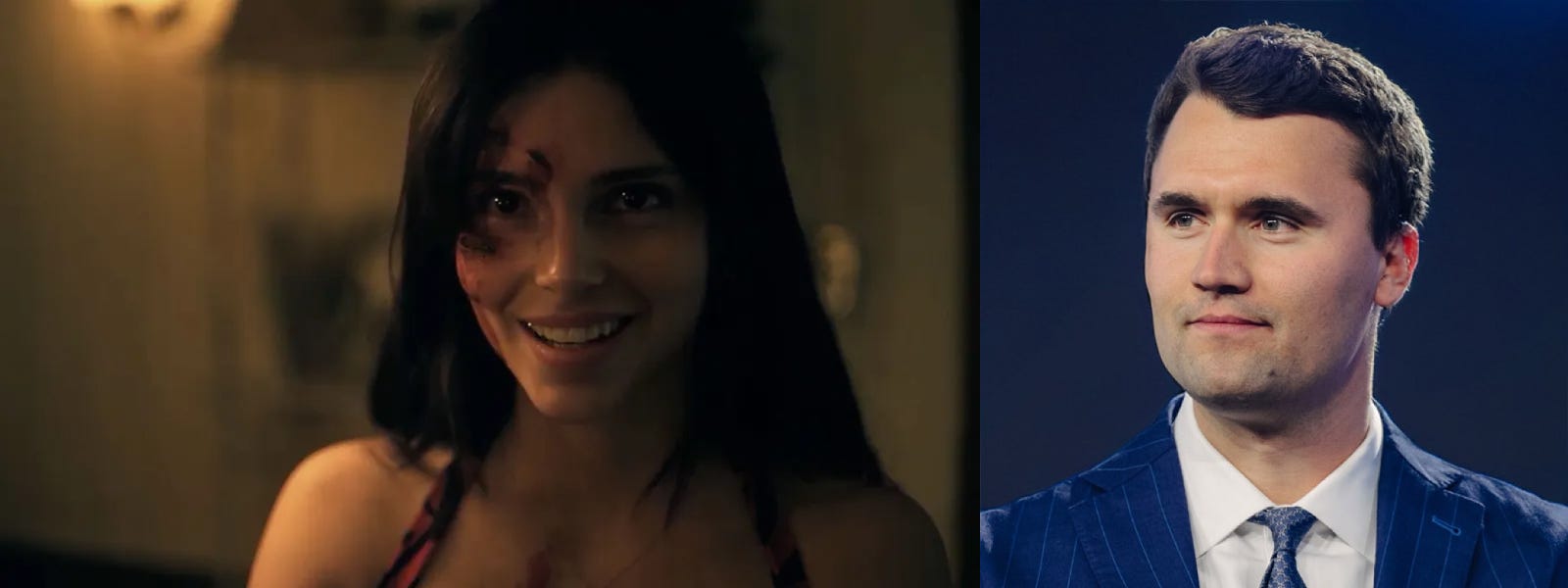
The movie Obsession recently came out, and I’d been receiving nonstop recommendations from friends to watch it, so I finally did. It revolves around two main characters: Bear, a rather awkward young man who bears a striking resemblance to Charlie Kirk, and Nikki, his girl-best-friend, who decidedly does not look like Charlie Kirk.1
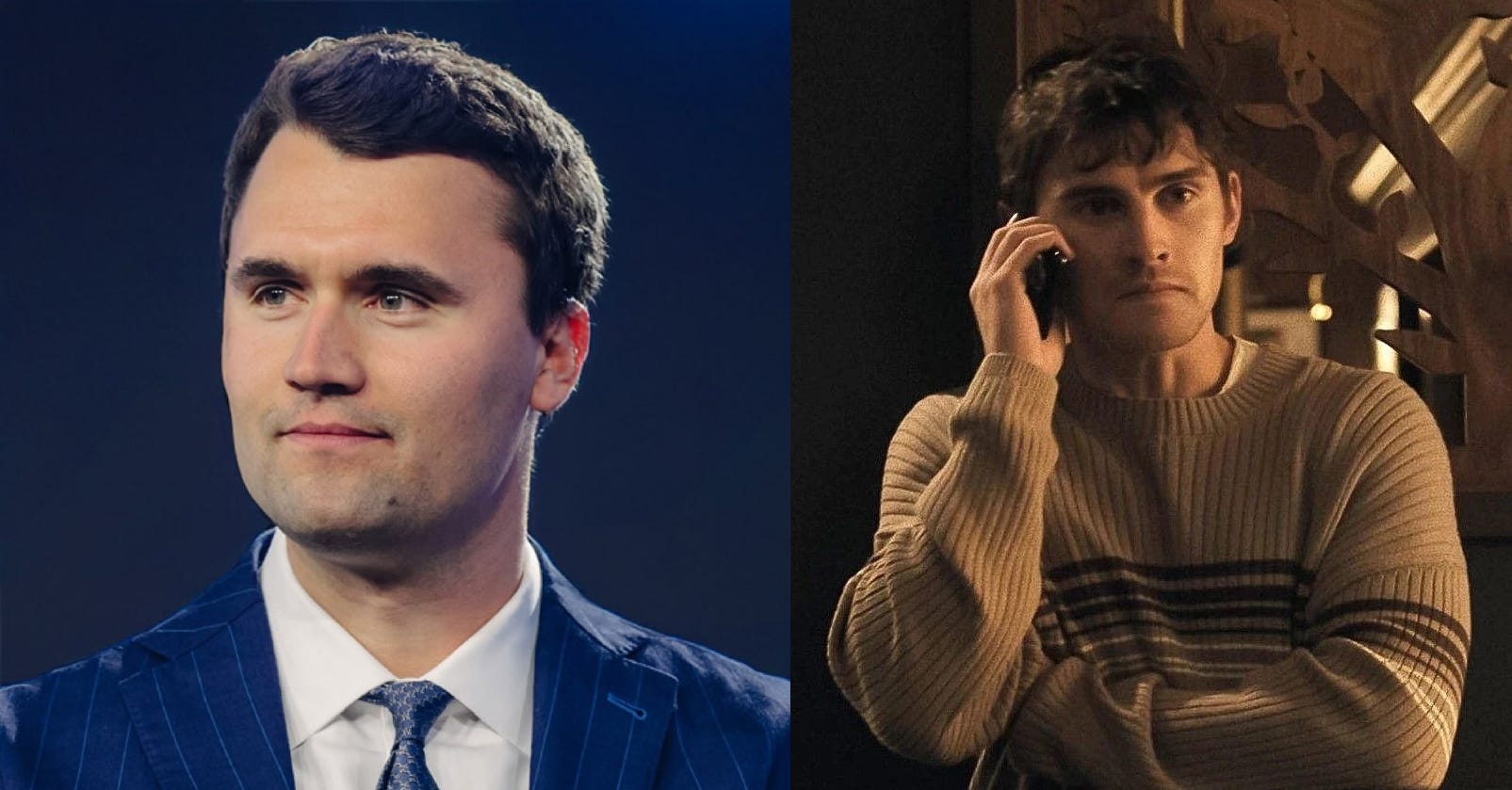
Now, Bear has a crush on Nikki—to such an extent that he visits an occult shop and purchases a woo-woo wish stick for her (charming present, right?). According to the instructions, whoever breaks the stick after stating their desire will have that desire granted. He’s ultimately unable to give the gift to Nikki due to circumstances I will not elaborate on, since I am not Wikipedia. So, naturally, he decides to use it himself and wishes that Nikki will love him more than anyone else in the whole wide world. It works! with the caveat that it is actually his cat who loves him—his cat who died at the beginning of the film (whom I failed to mention in order to make this presentation more interesting). The cat has possessed Nikki. This cat, due either to her lack of understanding of human ethics or simply that she is a cat, will do anything for his love, and this later includes killing Sarah, one of Bear’s other lady friends, who has a crush on him.
Now, onto some serious psychoanalytical stuff. Bear makes this wish regarding Nikki not out of necessity—not as a dying last wish—but because he is, fundamentally, an incel who cannot summon the courage to actually confess his feelings to her. This brought to mind Deleuze’s analysis of masochism, as all things ruined by Continental Theory eventually do. For those of you who are unfamiliar with masochism, I will briefly defer to Wikipedia:
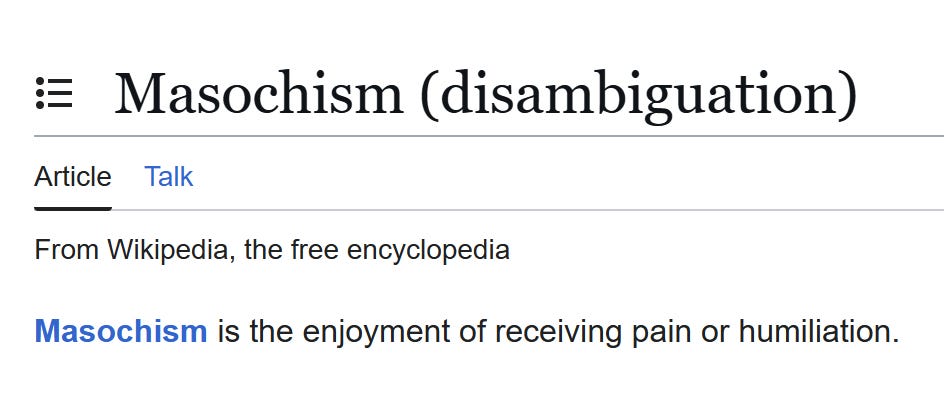
This is obviously very basic, and not really present in Bear’s character, since he is, throughout the film, visibly and pathetically scared of literally anything cat-Nikki does. But Deleuze’s analysis of this phenomenon goes much deeper, and gets to the heart of what I think Bear’s character is about.
Masoch's three women correspond to three fundamental mother images: the first is the primitive, uterine, hetaeric mother, mother of the cloaca and the swamps; the second is the Oedipal mother, the image of the beloved, who becomes linked with the sadistic father as victim or as accomplice; and in between these two, the oral mother, mother of the steppe, who nurtures and brings death. We call her intermediate, but she may also come last of all, for she is both oral and silent and therefore has the last word.
—Masochism: Coldness and Cruelty, p. 552
Deleuze says masochism is fundamentally a quest for the nurturing of the Oral mother through the hetaeric and Oedipal mothers. Essentially, you pursue nurturing through punitive parental structures. Now, Lacan says we are always asking the Other what they desire;3 this is fundamentally the problem for Bear, since he is neurotically unsure whether he will be what the Other (Nikki) desires. Whereas the traditional solution would be to grow some balls and tell her how he feels, however, Bear instead uses the wish stick to project Masoch’s maternal fantasy onto Nikki. With this in mind, we can briefly play a game of process of elimination to figure out which mother he ends up with.
Not the hetaeric (she’s exclusive to bear) :[
Not the Oedipal (she doesn’t punish bear) :[
But Nikki both kills people (brings death, like Deleuze said) and nurtures Bear… so perhaps it’s the… the Oral mother! :]
Bear is the masochist par excellence given this definition—and, like most exercises of real masochism, he’s the only one who benefits. On occasion throughout the movie, the real Nikki (not the cat) resurfaces. For example, once before they are about to sleep together, she exclaims “no!” before immediately returning to begging him to sleep with her. Even more striking, while cat-Nikki is asleep and Bear is out with Sarah, the real Nikki whispers to Bear, “kill me please.” After she says this, in a way that really reveals his masochistic maternal fantasy, Bear asks her if it would really be so bad to be in a relationship with him. She says she doesn’t like him romantically, and he, in an act of utter cruelty, leaves and dismisses her.
On another note, the fact that a cat is smart enough to both maintain a relationship and also kill other humans with human weapons (she later uses a gun to kill Bear’s male best friend) says something interesting about non-human intelligence. It is absolutely indifferent to our intentions, to the narratives we tell ourselves (like how Bear supposedly just wanted a healthy relationship), and to our ability to “control” it. Bear continually asks Nikki to stop being weird throughout the movie; she says yes, and then does what she does, because her mind simply works differently, and there is nothing he can do about it. Whether we are talking about a cat, artificial intelligence, or occult spirits, I think this story offers a good demonstration of why we shouldn’t assume intelligence necessarily wants the same “goods” in all cases. Non-human intelligence wants what it wants, and will pour itself into its actions just as we do—whether in a sweet way, or in an insane way like Nikki in her relationship with Bear.
Anyway, that’s all I have for today. Thank you guys for reading, and…
In proximum!
Deleuze, Gilles, and Leopold Sacher-Masoch. Masochism: Coldness and Cruelty. Zone Books ; Distributed by the MIT Press, 1991.
Lacan, Jacques, et al. My Teaching. Verso, 2024.
I saw a theory that said her behavior was the manifestation of the strained relationship with her father. She acts very child-like, not romantic but a sort of dependency.
Interesting psychoanalytic take on the cat-theory though!